Transsib
1940 · SZD Class TE · Work 30 of 1,871
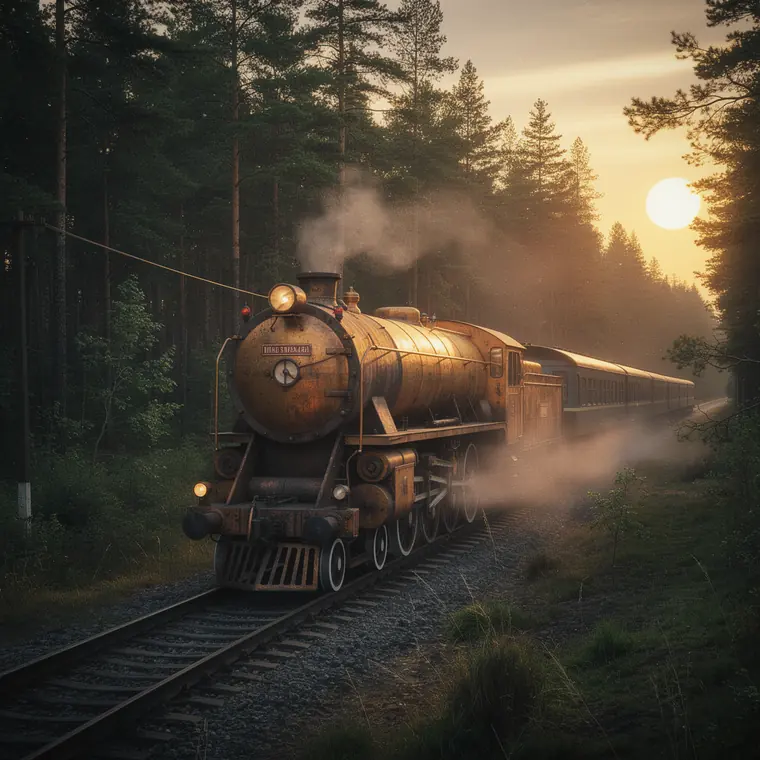
A heavy Soviet locomotive on the Trans-Siberian main line, endless taiga forest closing in on both sides of the single track, low sun behind the trees.
- What it was used for
- Traffic on the Trans-Siberian Railway: 9,289 kilometres from Moscow to Vladivostok, built between 1891 and 1916 — the longest railway in the world and the first fixed link between Europe and Asia. Built by convicts, soldiers and recruited peasants, at minus forty in winter and in swamp in summer. No count of the dead was ever kept.
- What was new
- What was new was not the engineering but the reach: a railway that crosses a continent and is therefore a route and an instrument of power at once. Without it Russia could not have held the east — and with it, in 1904, the army went to war against Japan while the line around Lake Baikal was still unfinished and trains had to be ferried across the water.