Big Pit Blaenavon
1880 · Riveted Steel Headframe · Work 324 of 1,871
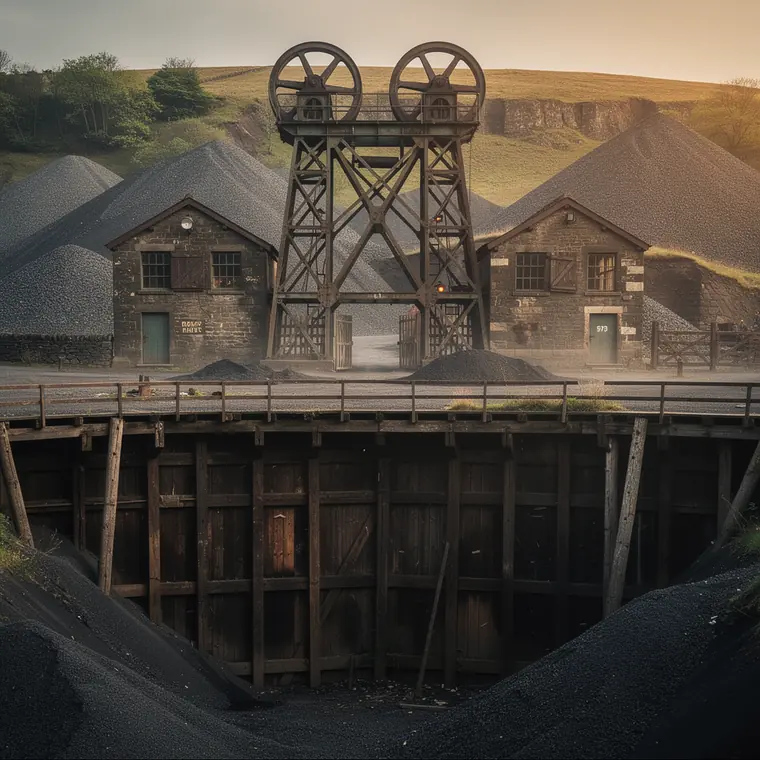
The riveted lattice headframe of Big Pit at Blaenavon in Wales, two sheave wheels above the shaft, the stone winding house and lamp room standing among slag tips on the hillside.
- What it was used for
- A coal mine of the Blaenavon Company in South Wales, originally Kearsley's Pit. According to the Blaenavon World Heritage account the shaft was sunk to 200 ft in 1860 and deepened in 1880 to its present depth of 300 ft; some 1,300 men worked here in the early 1920s. The surface buildings carry staggered dates: fan house 1910, pit bank and steel headframe 1921, baths and canteen 1939, electric winder 1952. The pit closed in February 1980, reopened as a museum in April 1983, and has been run by Amgueddfa Cymru (then the National Museums and Galleries of Wales) since 1999. Visitors descend 90 metres, as the museum itself puts it.
- What was new
- No technical innovation can be documented for Big Pit, and the date 1880 marks no beginning: it stands for the deepening of an already twenty-year-old pit by 100 ft. What distinguishes the site is preservation, not invention. UNESCO's description of the site, inscribed in 2000, notes that the surface buildings remain "almost exactly as they were when coal production ceased in 1980". The price is in the same sentence: Big Pit stayed complete because it stopped. It was the last deep mine in the Blaenavon area, and the workforce for whom the baths and canteen were built in 1939 went in 1980, while the buildings stayed.