The Collator Type 077
1937 · Card Merging · Work 584 of 1,871
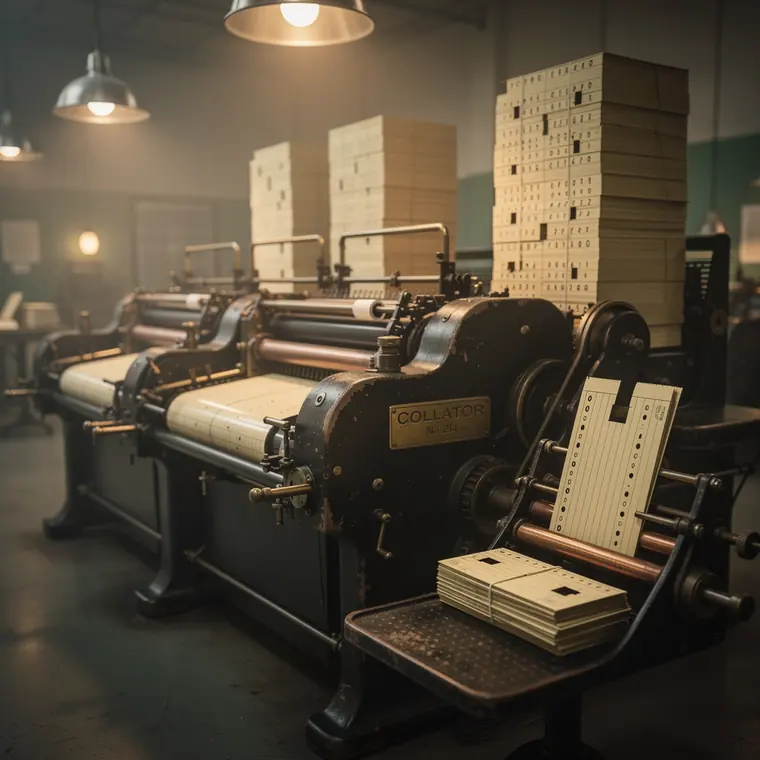
A collator with two feed hoppers and four stackers, two ordered decks merging into one sequence, a small reject stacker holding a handful of odd cards set aside, cards with one corner cut ruled into columns with the digits 0 to 9 printed down each column and rectangular holes punched in a scattered pattern, the two hoppers and their decks close to the lens, the stackers behind in soft focus, the machine in black enamel with brass card guides, a machine room lit by pendant lamps.
- What it was used for
- The collator merged two decks of cards. It had two feeds and five pockets, drew a card from each deck at the same time, compared them and decided which pocket each should fall into. With it a new set of cards could be filed into an existing file, two decks checked against each other, duplicates removed, single records selected, and the sequence of a deck verified; the routing was set on the control panel. Each feed read 240 cards a minute, 480 together. IBM developed the machine for the United States Social Security programme; in 1955 it rented for $80 a month.
- What was new
- What was new was that one machine could read two files at once. Until then decks had either to be sorted together or interleaved by hand; IBM itself describes the 077 as its entry into a field that had been accepted as requiring manual assistance to the punched-card system. The occasion was a contract: Social Security had to bring the wage cards sent in by millions of employers together with the accounts of insured workers. According to Social Security's own account the machine was deployed to this task in early 1937. That is the reversal: merging two lists is exactly what makes a nationwide register of persons possible. Columbia University, citing Charles and Ray Eames, writes that the collator let government run national programmes at the level of the individual, such as the 1943 withholding tax.