The Proof Machine
1934 · Bank Proof Machine · Work 739 of 1,871
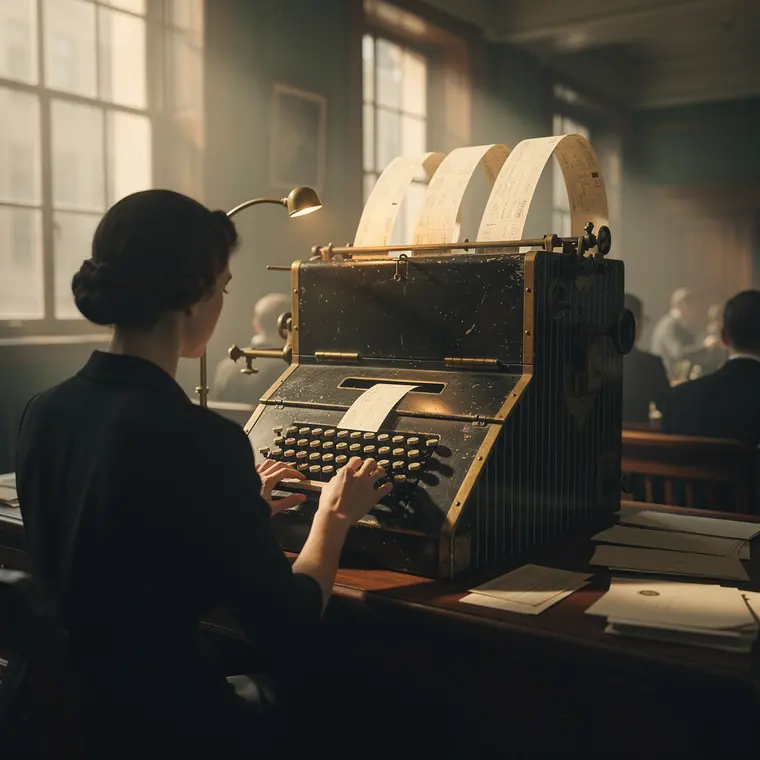
A bank proof machine of 1934 in a bank in New York, a desk-high cabinet of black enamelled steel with fine pale pinstripe lining, at the front left a sloping keyboard, its small round key tops seen at a slant as pale dots, a narrow slot in the desk top, behind it a taller closed box housing the sorting receptacles, from the top several narrow paper tapes rising side by side, a small gooseneck lamp, a woman in a dark dress seen from behind seated, right hand on the keys, left hand dropping narrow slips of paper seen edge-on into the slot, tall windows, daylight from the left.
- What it was used for
- The IBM 801 Bank Proof Machine worked through the checks a bank took in. The operator selected the sorting key, keyed the amount on a ten-key adding keyboard, laid the check in the throat and worked the release bar; the machine printed endorsement, identification numbers and date on it before filing it, recorded the amount on an adding strip and a master control strip, and totalled by deposit group. According to IBM, Frederick Lincoln Fuller led the development at the laboratories in East Orange, New Jersey; the machine was introduced in 1934. For the British and Australian markets there was a separate keyboard for pounds sterling.
- What was new
- The 801 combined sorting, marking and reckoning in a single operation: the check was filed, printed and posted twice - once in its deposit group, once in the master control. The "Proof" in the name is banking parlance: to verify checks formally was to "prove" them, and the system revealed any errors at once. What it could not do was read. Every amount was keyed by hand, and so it stayed: according to IBM, a practised operator of the successor 803 of 1961, which had 36 pockets, managed up to 1,500 checks per hour - only a transit system of 1963 reached 50,000 per hour. IBM installed nearly 500 systems at 140 customers within 4 years.