Steam Locomobile
1870 · Portable Steam Engine · Work 107 of 1,871
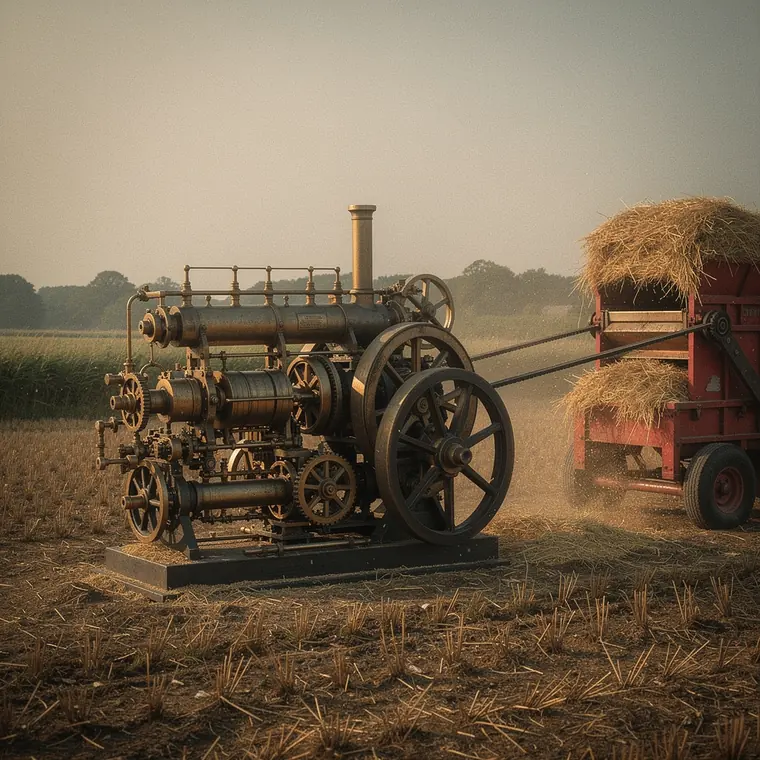
A portable steam engine standing in a harvest field, long belt running to a threshing machine, straw stack building beside it, stubble and hedgerows behind.
- What it was used for
- A locomobile was boiler and engine on one frame, hauled by horses or oxen to the farm, where it drove the threshing machine by belt. The 1882 Heinrich Lanz locomobile in the TECHNOSEUM gives ten horsepower, weighs 4.5 tonnes and is about four metres long; three men worked it: engineman, stoker and a hand for water and coal; the whole threshing set took some sixteen people. It was too dear for a single farm, so it was hired: the contract thresher came with machine and crew. Such threshing engines were still at work until about 1930.
- What was new
- What was new was that boiler and engine formed one unit: no steam pipe between them, little heat loss, no erecting on site. The power went to the work instead of the work to the power. The type appeared in the 1840s; R. Wolf's company publication of 1912 calls its own works the first German factory specialising in them, which is the maker's own claim. The barb: the movable machine mostly stood still. Wolf's locomobile number 2 of 1862, four to six horsepower at 120 rpm, went to a cardboard mill at Schoenebeck, was bought back by its maker and drove the carpentry shop at the Buckau works until at least 1912: fifty years standing still, first at Schoenebeck, then in the maker's own works.