Leon Bollee Voiturette
1896 · Three Wheel Voiturette with Tandem Seat · Work 252 of 1,871
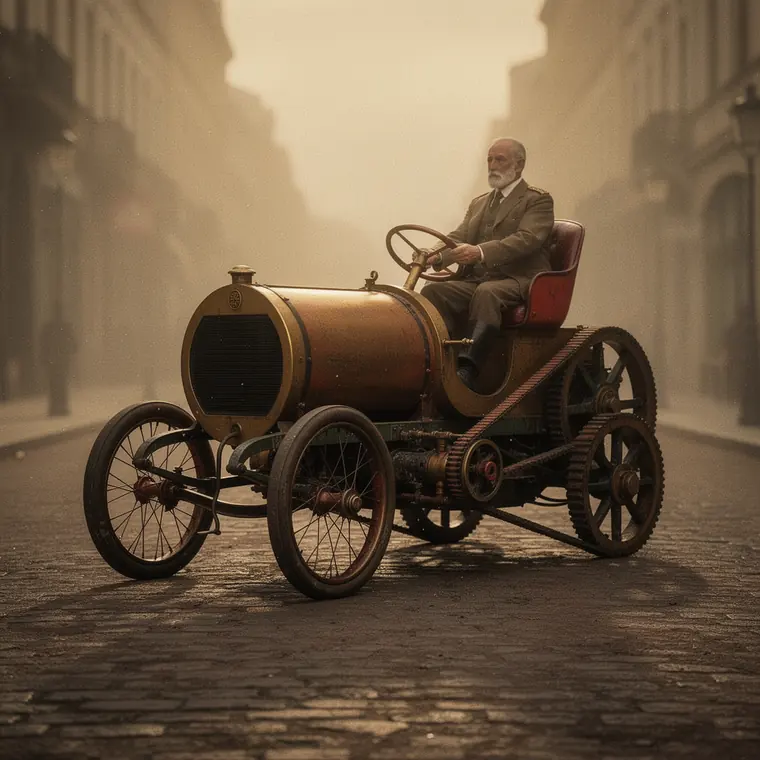
A Leon Bollee Voiturette on a Le Mans boulevard, three wheels with the passenger seated ahead of the driver, long horizontal single-cylinder engine beside the rear wheel, expanding belt pulleys.
- What it was used for
- From 1895 Léon Bollée of Le Mans built a three-wheeled tandem with a horizontal 3 hp single-cylinder engine. The passenger sat in front of the driver, which earned it the French nickname "Tue belle-mère" (mother-in-law killer). It was driven mainly by sporting amateurs and in races: according to Motor Sport, Bollées took the first four places in their class in Paris–Mantes in 1896, and Charles Rolls ran one in 1897. According to Grace's Guide, Harry Lawson paid £20,000 for the English manufacturing rights in 1896. How many were built is uncertain: Motor Sport says "perhaps 750" by the licensee, other accounts "several hundred".
- What was new
- What lasted was mainly a word: Bollée called the vehicle "voiturette" and registered the name; it later came to denote a whole class of small cars. A French history blog dates the patent for the "Cycle automobile, Système Léon Bollée" to 1895 and the tricycle's sale to 1896; whether filing and grant differ is unresolved. The engine is said to have been designed by his brother Amédée. The vehicle sat between motor tricycle and car: Motor Sport gives 120 kg for a Bollée against 75 kg for a De Dion tricycle.