Haynes Pioneer
1894 · Petrol Buggy with Marine Engine · Work 256 of 1,871
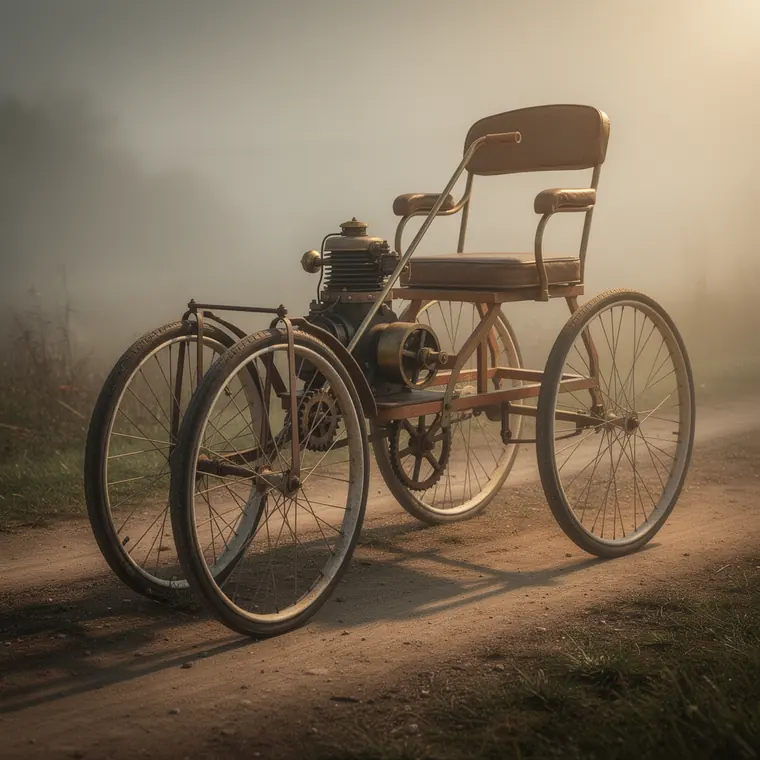
The Haynes Pioneer on the Pumpkinvine Pike outside Kokomo, a light buggy on wire wheels without dashboard, one-cylinder Sintz marine engine mounted under the seat, tiller held in hand.
- What it was used for
- Elwood Haynes was field superintendent of the Indiana Natural Gas Company. In November 1893 he bought a one-cylinder, one-horsepower petrol engine; brothers Elmer and Edgar Apperson built the carriage to his plans, according to the Haynes museum for 40 cents an hour. On 4 July 1894 – a date that, according to the Indiana Historical Bureau, rests mainly on reminiscences with few primary accounts – the car was towed out of Kokomo by a horse and buggy, to avoid frightening horses in town, and then ran about six miles on the Pumpkinvine Pike at about seven miles per hour. Haynes never sold it and gave it to the Smithsonian in 1910. The sources give different accounts of his motive.
- What was new
- The sources checked name no technical innovation. What was new was the claim: in 1912 Haynes's company fitted its cars with a hood ornament reading "Haynes: America's First Car". Charles Duryea challenged it, and later so did the Appersons, who had built the vehicle. The Indiana Historical Bureau considers a definitive statement on who built the first car impossible for lack of documentation; the Indiana Historical Society writes that Haynes was, if not the first, among the first. According to Indiana Landmarks, the Duryeas (1893) and John William Lambert drove earlier; a marker in Ohio City dates Lambert's car to 1891.
Further reading
- Indiana Historical Bureau: Marker Review 34.1966.1 (Elwood Haynes)
- Indiana Historical Society: Elwood Haynes (Essay)
- Elwood Haynes Museum, City of Kokomo: Booklet
- HMdb: Indiana historical marker, Haynes test run 4 July 1894
- Indiana Landmarks: Elwood Haynes' Pioneer
- Smithsonian: Haynes automobile, 1894
- HMdb: Ohio City - John W. Lambert, first automobile accident 1891 (Tafel)