The Co-operative Store
1875 · Co-operative Store · Work 388 of 1,871
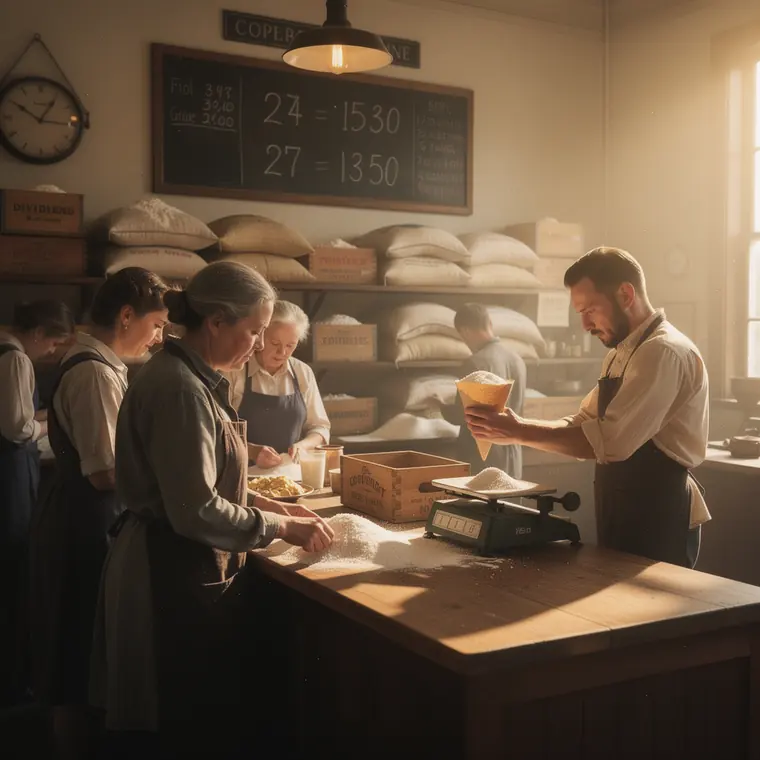
Shoppers at the counter of a co-operative store, a clerk weighing sugar into a paper cone, dividend numbers chalked on a board above sacks of flour and tea chests.
- What it was used for
- A co-operative shop that returned its profit to the purchasers. At Rochdale the Pioneers leased the ground floor of a warehouse in Toad Lane for three years at £10 a year. The starting capital was £28 according to George Jacob Holyoake; once the fixtures had been paid for, only £14 or £15 was left to invest in stock. The money came from weekly subscriptions collected at members' homes, first twopence, later threepence. On the evening of 21 December 1844 the shutters were taken down; at the end of the first quarter's trading, 31 March 1845, the society paid a dividend of 3d for every pound members had spent in the store. Holyoake describes a Saturday night in the mid-1850s: five people serving behind twelve yards of counter, £420 taken during the day, two hundred books lent out, and a watch club collecting from its fifty-eight members. He was a partisan of the movement and writes openly as an advocate.
- What was new
- The movement's own museum denies the claim to primacy: the Pioneers never claimed to be the first co-operative society; there were co-operative societies before them, and many of those failed. They are regarded as the first successful one, and the Rochdale principles evolved out of their decisions, methods and practices. What was functionally new was the dividend on purchases as a standing arrangement together with payment in cash: by Holyoake's account the member no longer got into debt at the grocer's, and the store became his savings bank instead. The Future Museum calls the Fenwick Weavers of 1761 the first co-operative, but for the credit function speaks only of the first recorded. The barb is in the founding story: Holyoake printed the list of the twenty-eight founders only decades later and admits that four names were missing and were determined afterwards with a former president of the store.