UNISERVO
1951 · Metal Tape Drive · Work 627 of 1,871
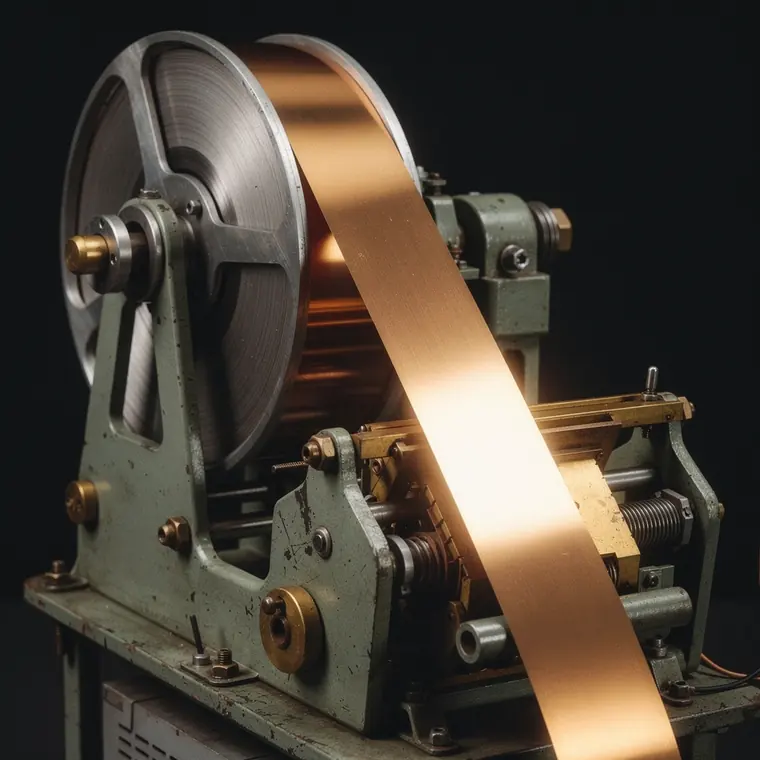
A tape drive handling a thin nickel-plated bronze tape, the metal ribbon bright and stiff and catching light like a blade, a heavy reel of it standing on the spindle, the tape running over plain metal guides and past the head block, the housing of desaturated grey steel, seen close so the reel and the bright metal ribbon fill the frame, a single soft light from behind the ribbon flashing along its polished edge, warm metal against grey, the drive alone against pure black.
- What it was used for
- The UNISERVO was the tape drive of the UNIVAC I. Ten of these drives were the standard complement of an installation. The tape was not plastic but metal: phosphor bronze with a cobalt-nickel plating, about half an inch wide. Character density could be set to 20, 50, 100 or 128 characters per inch, writing ran at 100 inches per second, and records on the tape had a fixed length of 60 words. The UNIVAC I itself used 5,200 vacuum tubes. The first machine went to the Bureau of the Census in early 1951; by 1957, according to the Smithsonian, 46 installations were in place.
- What was new
- What was new was not magnetic recording but the place of tape in a computing installation: the Rhode Island Computer Museum calls the UNISERVO the first magnetic tape drive sold with a commercial computer. That removed the punched card as the measure. A record was no longer limited to 80 characters, and the same data was expected to take less than one per cent of the volume, according to the computer museum of the University of Amsterdam. The barb lies in the choice of material. BINAC's plastic tape had proved unreliable, so metal was used, and the metal drives could not handle the plastic tapes that became the industry standard a few years later.