The Amsterdam Register Attack
1943 · Burned Card Troughs · Work 709 of 1,871
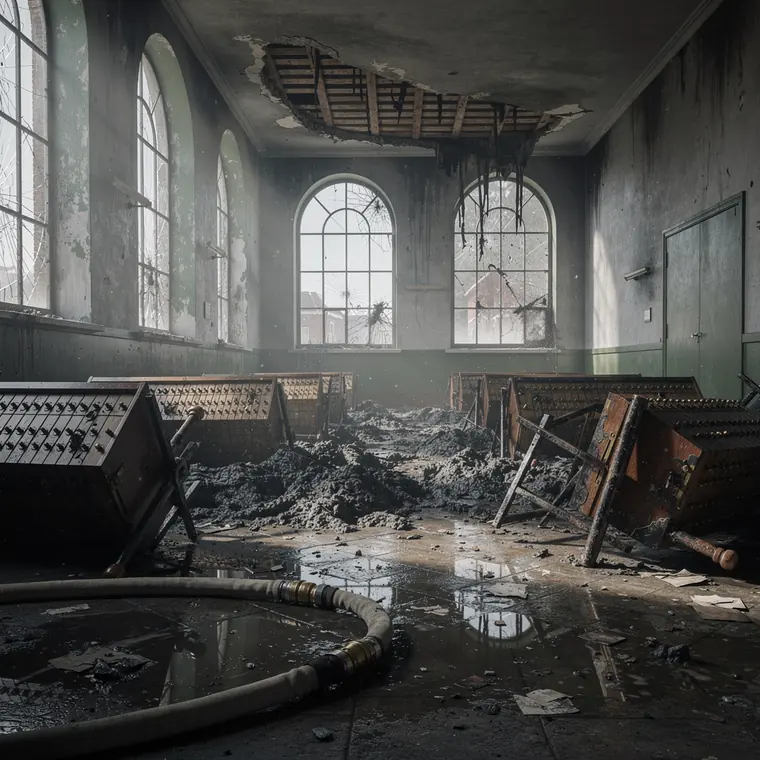
The high hall of a municipal population registry in Amsterdam on a March morning in 1943 after a fire, rows of overturned wooden and steel card index troughs about one metre long with charred black edges lying across the floor, between them a knee-high heap of soaked, caked-together record cards seen only as a grey and blackened mass from the edges, hose water standing on the stone floor and mirroring three tall round-arched windows with cracked panes, a sunken section of plaster ceiling with bare laths hanging at the back, walls of bare soot-darkened plaster from floor to ceiling, a canvas fire hose lying across the floor, cold morning light slanting through thin remaining smoke from the left, the hall deserted and still, only rubble, water and light.
- What it was used for
- On the evening of 27 March 1943 a resistance group raided the Amsterdam civil registry at Plantage Kerklaan. The target was the card index the occupiers used to track down Jews, forced labourers and members of the resistance. In the account of TracesOfWar nine men went in, six in Dutch police uniform and three in civilian clothes. The artist Willem Arondéus posed as a police captain. The guards were disarmed, drugged and laid down in the Artis zoo. The group then opened the archive cabinets, doused the papers with benzol and set explosive charges. These went off around eleven at night and the building burned. The fire brigade turned out deliberately late, and the water did further damage. The operation was led by Gerrit van der Veen and Arondéus.
- What was new
- What set it apart was not the technique but the target. What was attacked was neither a barracks nor a factory but a filing cabinet. Resistance here meant striking at the administration's memory. The raid also showed why that rarely works. Packed tightly in archive cabinets, paper burns badly. TracesOfWar writes that only 15 per cent of the documents were destroyed by the fire and several thousand more were made unusable by water. Then there was the timing: the Verzetsmuseum records that most Jews had already been arrested, so destroying the data had hardly any effect left. The price was paid in full all the same. A careless conversation put the security service on the trail, 21 people were arrested, and on 1 July 1943 twelve of those involved were shot in the dunes near Overveen, Arondéus among them. The informer received 6,500 guilders.
What the sources leave open: The share of records destroyed rests on a single source: TracesOfWar gives 15 per cent, while the Verzetsmuseum gives no figure and says only that not all the papers burned completely. The number of intruders is given as nine (TracesOfWar) and about ten (police report, per the Verzetsmuseum).