The Printer Completed
2002 · Stereotype Printer · Work 518 of 1,871
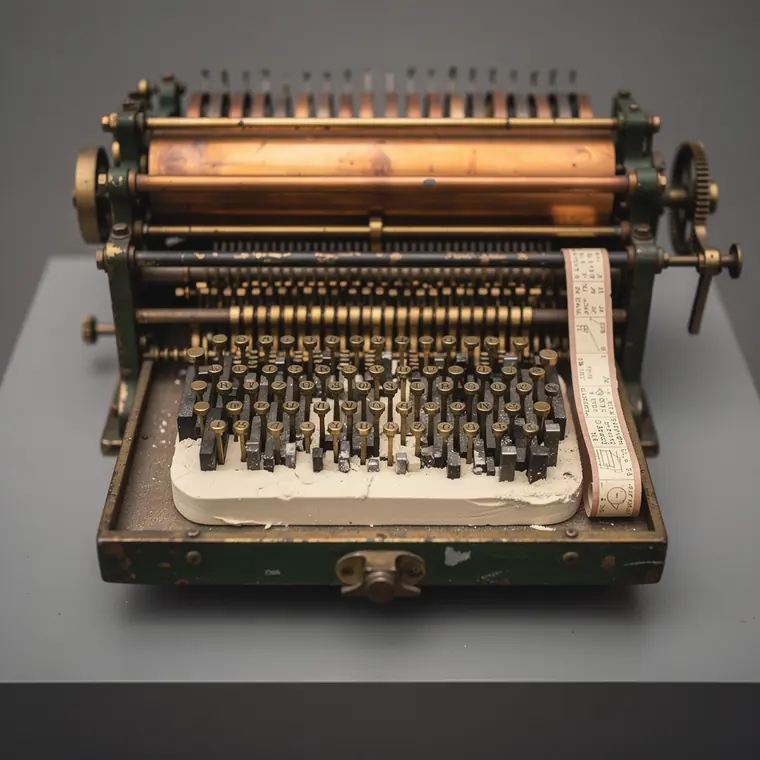
The printing apparatus of a difference engine finished and coupled to the engine, a bed of type heads poised over a tray of soft plaster, a curl of printed paper tape emerging from the second output, brass and steel, the frame of the engine visible at one edge, the type heads set in even rows across the bed, the apparatus standing on a plain grey plinth before a flat grey background, even flat light from directly in front.
- What it was used for
- The printing section of Difference Engine No. 2 is not a separate machine but the second half of the same one: Babbage had drawn it into the design. It does two things at once. It prints each result in ink on a roll of paper, and it presses the same result into a soft material held in flat trays - wet plaster of Paris, for example. A printing plate can be cast from that impression. Thirty of the thirty-one calculated digits are printed and moulded; the highest-value digit is not transferred. The apparatus has some 4,000 parts. The Science Museum completed it in March 2002, paid for by Nathan Myhrvold. Since then the machine runs as Babbage had drawn it.
- What was new
- Printing calculating machines existed before. The machine of Georg Scheutz and his son Edvard was already impressing its results into stereotype moulds in the 1850s. What is new in this apparatus is that the page layout itself is set, by pattern wheels: line height, number of lines, margin widths and number of columns are preset, blank lines can be left between groups, and line wrap at the end of a line and fly-back to the top of the page happen automatically. The values travel from the result column into the apparatus through racks, pinions and spindles without the calculation stopping for it. The barb is an equation: 4,000 parts calculate, 4,000 parts write down. Half the machine exists only so that nobody has to copy a figure or set it in type - which is exactly where the errors came from that Babbage had set out against.
What the sources leave open: All statements about the apparatus come from the Science Museum's technical description. The statements about the Scheutz machine rest on the Computer History Museum and the Science Museum Group collection; neither says whether it could set its page layout.
Connections
Every connection names its kind. “Forerunner” on its own would be a claim.
- Follows fromThe Printing Apparatus1849The printing and stereotyping apparatus from Babbage's 1847-49 design for Difference Engine No. 2 was only completed in 2002 and added to the calculating section finished in June 1991 - more than 150 years after the design.Source: Computer History Museum: The Engines - A Modern Sequel · Science Museum Group: Difference Engine No. 2, Objekt co526657