The Revolutionaries
Every fortieth work shows no object, but a person on a dated day with a machine.
The collection follows technology from the steam engine to the learning machine. Machines do not act on their own. Someone decides what they are for, who works them, who profits and who pays. That is why every fortieth place belongs to a person: monarchs and emperors, industrialists, revolutionaries, a socialist on trial, dictators.
Each of these works is a moment, not a portrait: the day on which the consequences of a machine became political. Queen Victoria opening the Great Exhibition, Marx answering a toast to the proletarians of Europe, Ford announcing the five-dollar day, Stalin riding the unopened Moscow Metro. The date, the place and what happened are documented; the work page names the sources and says plainly what the record leaves open.
Only the named person is shown with a recognisable face, modelled on a photograph in the public domain. Everyone else stays anonymous. Nobody in this series is honoured or mocked. Each page says who the person was, what they set in motion and what it cost.
The series so far
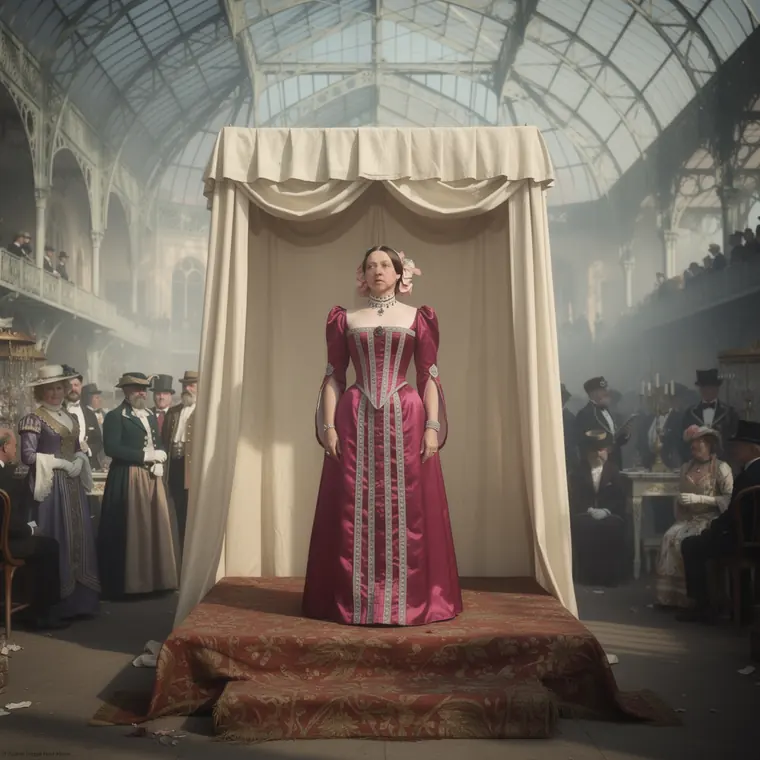 440Queen Victoria · The First of May1851
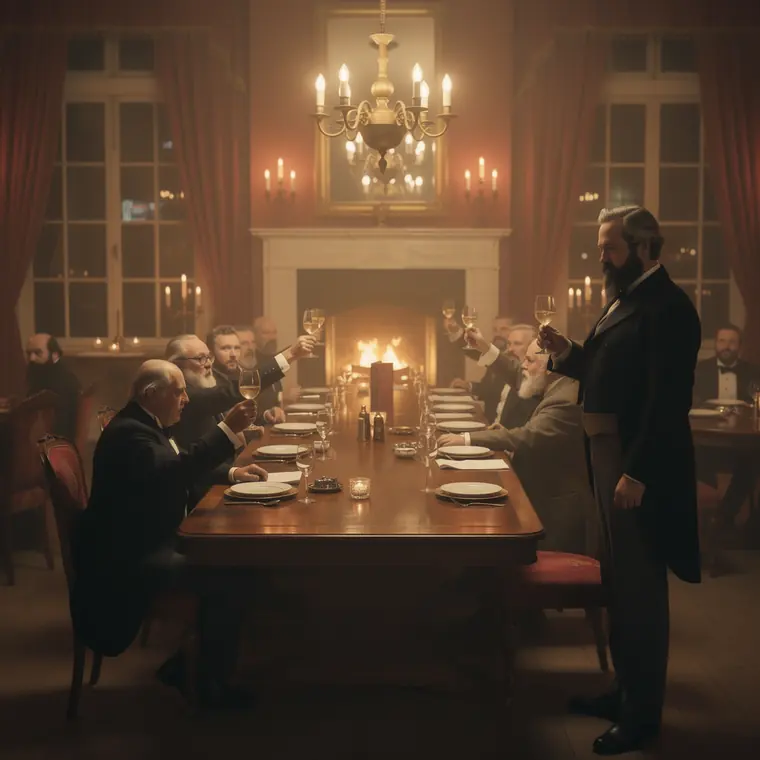 480Karl Marx · The Proletarians of Europe1856
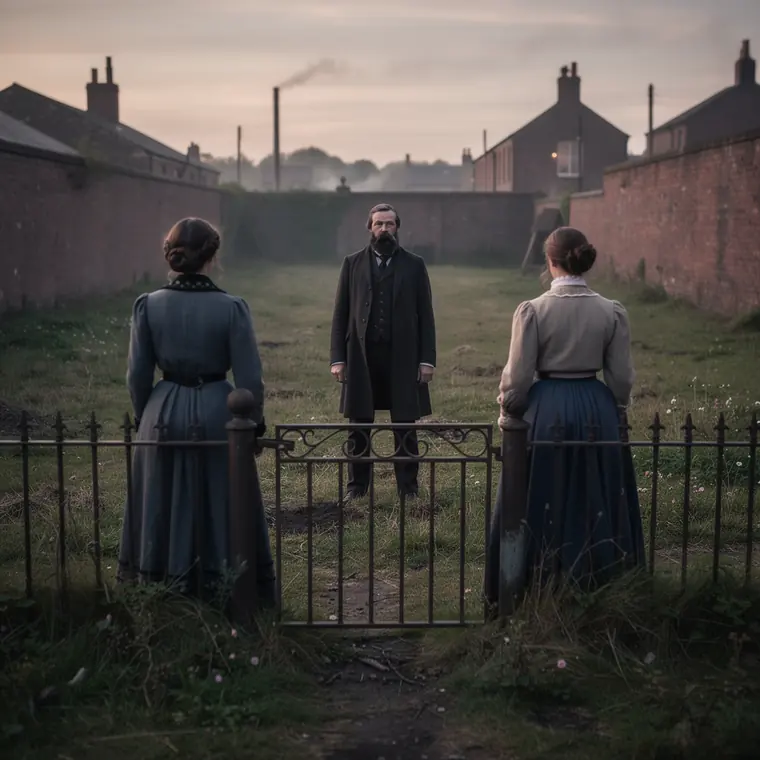 520Friedrich Engels · Ein freier Mann1869
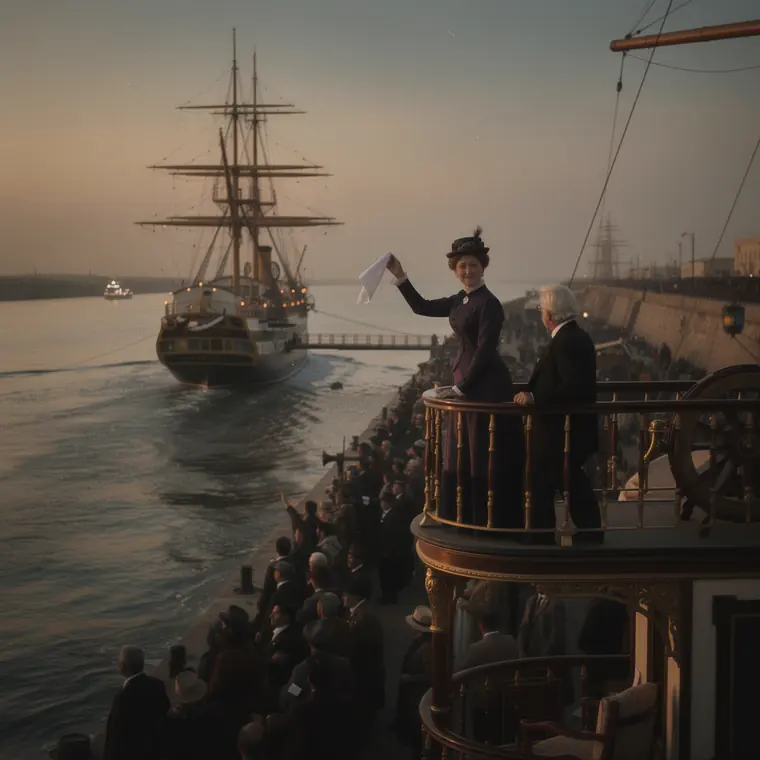 560Empress Eugénie · L'Aigle1869
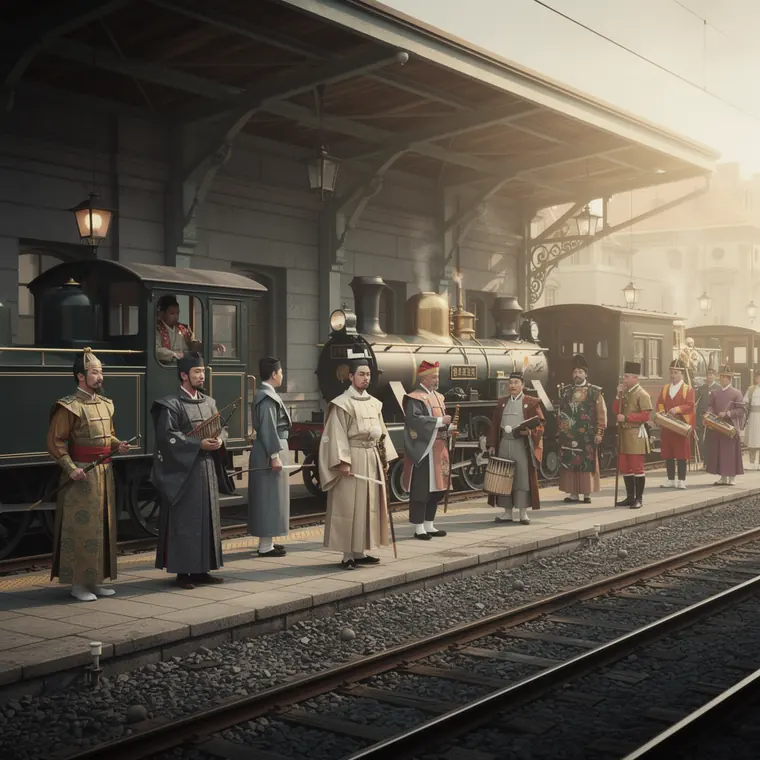 600The Meiji Emperor · The Emperor Takes the Train1872
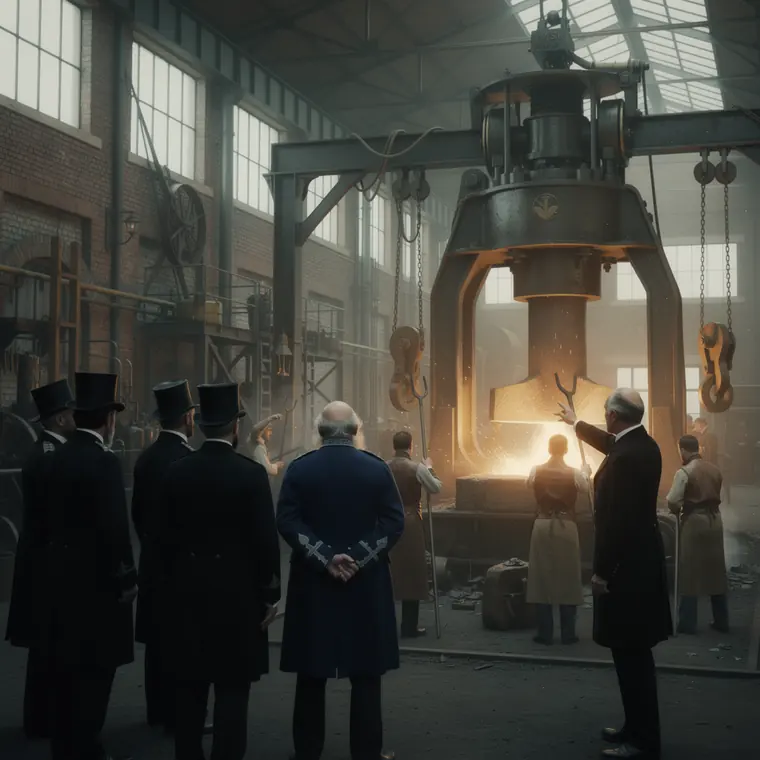 640Wilhelm I · Der Tausend-Centner-Hammer1877
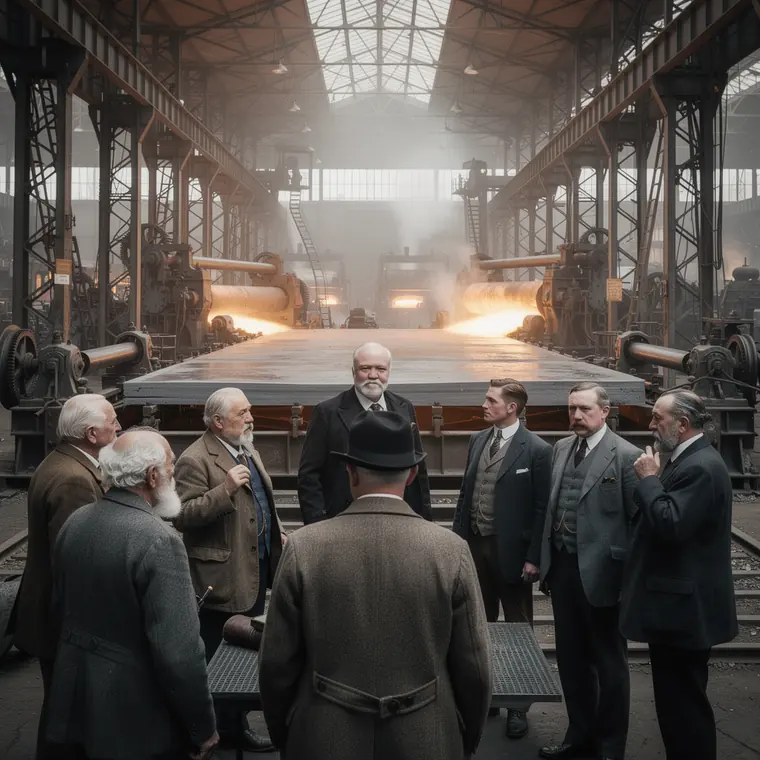 680Andrew Carnegie · To Bury the Past1893
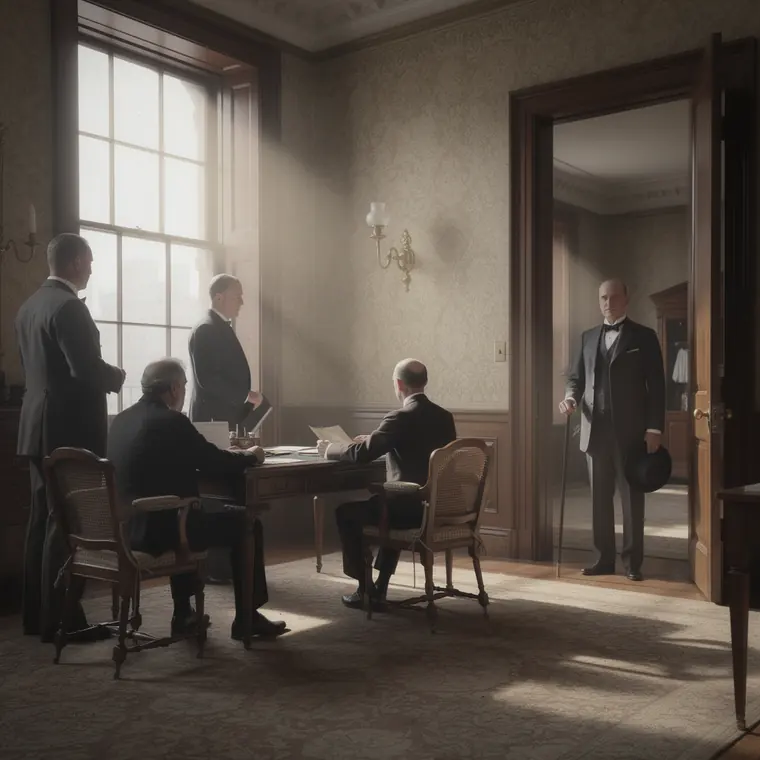 720Eugene V. Debs · Indicted and Arrested1894
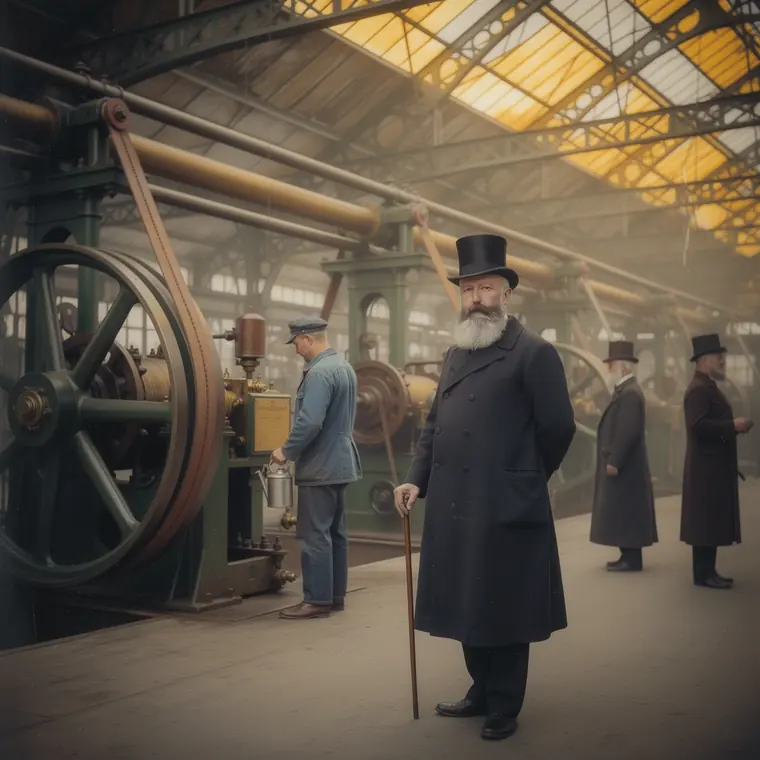 760Leopold II · Bruxelles-Tervueren1897
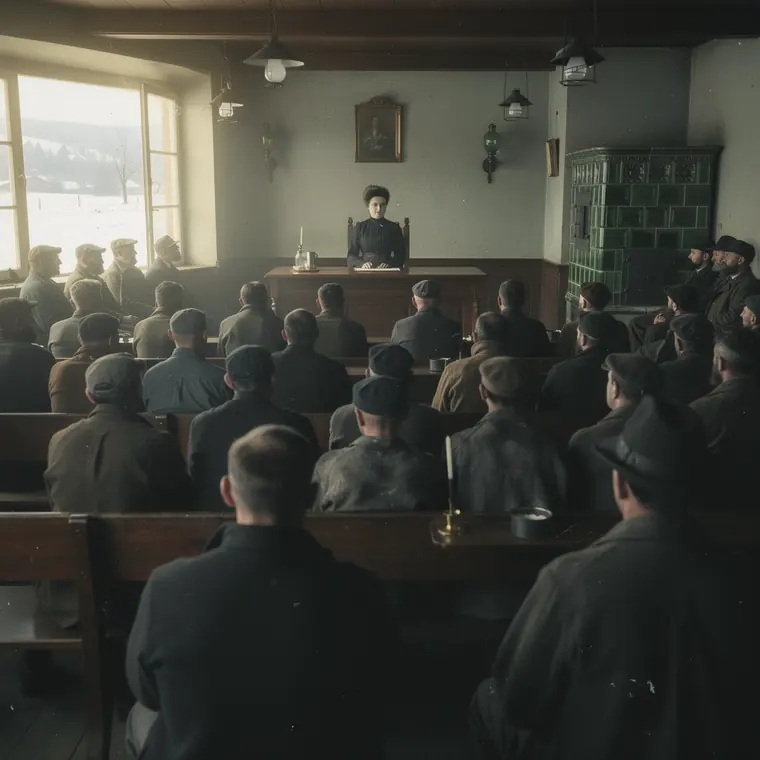 800Rosa Luxemburg · Meine Herren!1899
- 840John D. Rockefeller · Its Field Is the World1908
- 880Henry Ford · The Five-Dollar Day1914
- 920Walther Rathenau · Vier Zimmer1914
- 960Vladimir Lenin · The Electric Plough1921
- 1000Joseph Stalin · Ten Tickets1935
- 1040Mao Zedong and Peng Dehuai · The Lushan Letter1959
- 1080Ernesto Che Guevara · Trabajo Voluntario1961
- 1120Fidel Castro · The Ten Million1969
- 1160Deng Xiaoping · Two Pictures in the Rain1978
- 1200Erich Honecker · Neither Ox nor Donkey1989
More follow with the later epochs.